
Future-Ready Power Systems: Eng. Prof. R. H. Paul Memorial Oration Calls for Transformative Grid Modernization
By PUBLICITY DIVISION (IESL)
- The rapid growth of renewable energy is challenging conventional grid stability and operational practices.
- Digital technologies remain underutilized in real-time grid monitoring, forecasting, and control.
- Energy storage, though critical for renewable integration, is yet to be deployed at scale in Sri Lanka.
- Professor Arulampalam Atputharajah presents a comprehensive and forward-looking framework to modernize Sri Lanka’s power system, aligned with global best practices and local realities.
- The oration emphasizes the coordinated integration of renewable energy plants, digitalized grid operation, and the strategic deployment of energy storage systems.
- This approach ensures that national energy assets remain under state stewardship while enabling technological advancement and operational efficiency.
- It encourages data-driven decision-making, predictive maintenance, and smart grid applications to enhance reliability and resilience.
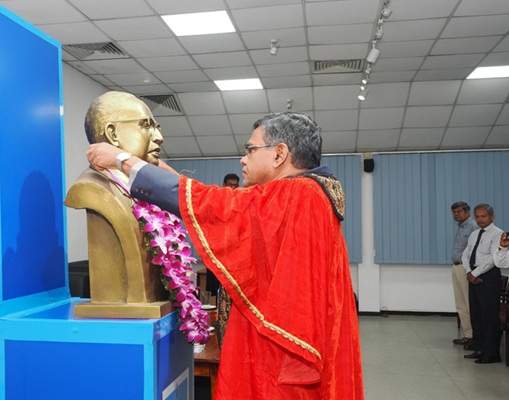 IESL President Elect. Eng. Prabodha Jinasena garlands a portrait of Eng. Prof.R.H.Paul
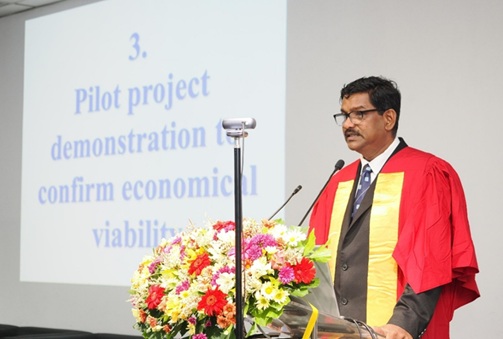 Professor Arulampalam Atputharajah
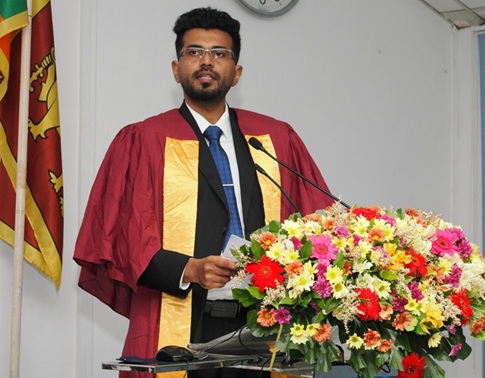 Chairman o The Electrical Electronics and Telecommunication Engineering Sectional Committee Eng. V.V.Muthugala
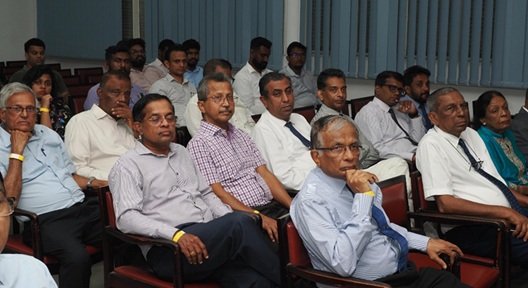
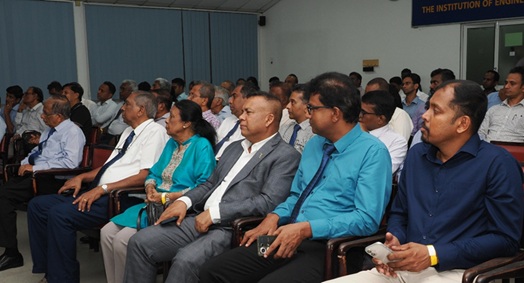 A distinguished gathering of energy sector professional" more highlighted caption
The Electrical, Electronic and Telecommunication Engineering Sectional Committee of the Institution of Engineers, Sri Lanka (IESL) held the prestigious Eng. Prof. R. H. Paul Memorial Oration 2026 on February 9th. Engineers, academics, policymakers, and energy-sector stakeholders gathered to reflect on the evolving challenges of Sri Lanka’s power system and the urgent need for modernization in an era of renewable energy transition.
The event paid tribute to Eng. Prof. R. H. Paul, a distinguished engineer remembered for his invaluable contributions to Sri Lanka’s power engineering landscape and his commitment to professional excellence. His legacy continues to inspire engineers to adopt forward-thinking solutions to national challenges.
Delivered by Professor Arulampalam Atputharajah—Senior Professor in Electrical and Electronic Engineering at the University of Jaffna and Vice Chancellor of the University of Vavuniya—the oration, titled “Future-Ready Power Systems in Sri Lanka,” offered a technically rich roadmap for the country’s energy future. Professor Atputharajah focused on three core pillars: the integration of renewable energy-based power plants, the digitalized operation of the grid, and energy storage.
As highlighted in the oration, Sri Lanka’s power system is at a critical transition point. The increasing penetration of renewable energy sources, such as solar and wind, introduces variability and uncertainty that conventional grid infrastructures were not designed to handle. Voltage instability, frequency fluctuations, reverse power flows, and forecasting difficulties are emerging as operational challenges that demand a shift away from traditional practices.
Professor Atputharajah emphasized that these challenges are systemic. The existing grid model, heavily dependent on centralized generation and manual operations, limits the ability to respond dynamically to renewable variability. A lack of advanced monitoring, real-time data analytics, and predictive control mechanisms further constrains effective decision-making.
Using practical case studies, the oration illustrated how digitalization—through smart sensors, advanced communication networks, AI-based forecasting, and automated control systems—can transform power system management. Such digital grids enable operators to foresee disturbances, optimize power flows, and maintain stability even with high renewable penetration.
A key pillar of the proposed framework was the strategic role of energy storage. From battery storage to pumped hydro solutions, storage was presented as the “missing link” to balance supply and demand, smooth renewable intermittency, and defer costly infrastructure upgrades. This approach ensures national energy assets remain under state stewardship while enabling operational efficiency.
The oration also highlighted the importance of policy support, regulatory adaptation, and investment in modern grid infrastructure. Capacity building, the adoption of smart grid standards, and long-term planning were identified as essential steps toward successful implementation.
However, Professor Atputharajah noted that transformation requires more than technology; it demands institutional readiness, skilled human resources, and a shift in mindset from reactive to proactive management. The cost of inaction, he warned, would be frequent instability and underutilized renewable investments.
In closing, IESL President Elect. Eng. Prabodha Jinasena reiterated the institution’s commitment to engineering solutions that address national priorities while honoring the values exemplified by Eng. Prof. R. H. Paul. The message was clear: Sri Lanka’s energy future depends on how boldly it embraces innovation today.
The 2026 Eng. Prof. R. H. Paul Memorial Oration served as a timely call for Sri Lanka to reimagine its power system as a digitally empowered, renewable-ready, and resilient national asset for generations to come.